Wednesday, November 4, 2020

Connecting Measurement Devices over TCP-IP

App Tip From Windmill Software

Online -- TCP/IP is a standard method for sending messages across a network. It is used on many networks including Internet and Ethernet.

It is a good idea when first connecting instruments to keep things as simple as possible. 


A direct connection between instrument and computer with no wider network connection seems sensible but it has some pitfalls.

  1. To connect your computer Ethernet port directly to the Instrument requires a special twisted cable. The cable used to connect your computer to a network hub will not work.
  2. If your computer uses a Dynamic IP Address then it cannot get an IP Address unless connected to a DHCP server. So in this arrangement won't work either.
  3. If the instrument uses a Dynamic IP Address it will not work unless your computer is configured as a DHCP server. Your computer will also need to perform the Name Server function to deal with such an instrument.
  4. Both computer and instrument will need to be on the same Subnet.

A direct connection is only easy if both computer and instrument use fixed IP Addresses on the same subnet and you have the correct cable.

Read the whole story online on the Windmill Software website: https://www.windmill.co.uk/tcpip-data-logger.html

Tuesday, November 3, 2020

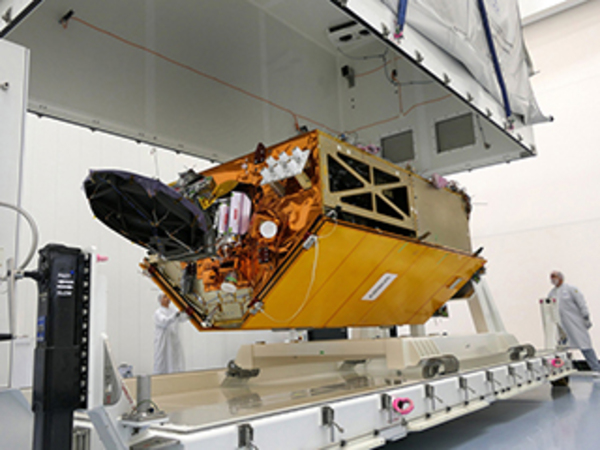
The world's latest sea-level satellite

On Nov. 10, the world's latest Earth-observing satellite is scheduled to launch from Vandenberg Air Force Base in California. As a historic U.S.-European partnership. 

 The Sentinel-6 Michael Freilich spacecraft will begin a five-and-a-half-year prime mission to collect the most accurate data yet on global sea level and how our oceans are rising in response to climate change. 

The mission will also collect precise data of atmospheric temperature and humidity that will help improve weather forecasts and climate models.

Read more online on the NASA website at: https://earthdata.nasa.gov

Friday, October 30, 2020

Required Roof Conditions for Infrared Flat Roof Moisture Survey

From Jersey Infrared Consultants


The requirements listed below are based on current industry standards, including those published by ASTM, RCI and Infraspection Institute. Compromising on any of these requirements may adversely affect the results of the Infrared Flat Roof Moisture Survey.

Dry Roof Membrane: 

The roof membrane must be dry at Sunrise. Areas that had moisture at Sunrise may not have enough solar loading to show the necessary thermal patterns. Since an infrared imager cannot “see through water”, any areas with the presence of ice, snow, or standing water cannot be surveyed.

Solar Loading:

The day of the Survey should be a mostly sunny day, providing good solar loading. A general rule of thumb is if the roof surface or a nearby similar surface (i.e. parking lot, street or sidewalk) is warm to the touch, the roof will be warm.

Read the whole story on the JerseyIR Consultants website at:

Tuesday, October 27, 2020

1586A Super-DAQ Demo Video Series


Fluke Calibration offers a series of videos on the 1586A Super-DAQ Precision Temperature Scanner.

The 1586A is a highly accurate and flexible temperature data acquisition with some very unique capabilities. These videos will show you what the 1586A Super-DAQ can do for you.

Friday, October 23, 2020

Sea level mission will also act as a precision thermometer in space


When a satellite by the name of Sentinel-6 Michael Freilich launches this November, its primary focus will be to monitor sea level rise with extreme precision. But an instrument aboard the spacecraft will also provide atmospheric data that will improve weather forecasts, track hurricanes, and bolster climate models.

"Our fundamental goal with Sentinel-6 is to measure the oceans, but the more value we can add, the better," said Josh Willis, the mission's project scientist at NASA's Jet Propulsion Laboratory in Southern California. "It's not every day that we get to launch a satellite, so collecting more useful data about our oceans and atmosphere is a bonus."

A U.S.-European collaboration, Sentinel-6 Michael Freilich is actually one of two satellites that compose the Copernicus Sentinel-6/Jason-CS (Continuity of Service) mission. The satellite's twin, Sentinel-6B, will launch in 2025 to take over for its predecessor. 

Together, the spacecraft will join TOPEX/Poseidon and the Jason series of satellites, which have been gathering precise sea level measurements for nearly three decades. Once in orbit, each Sentinel-6 satellite will collect sea level measurements down to the centimeter for 90% of the world's oceans.

Read the whole story online at: 

https://sealevel.nasa.gov/news/193/sea-level-mission-will-also-act-as-a-precision-thermometer-in-space

Increasing the accuracy of your temperature measurements.

Monitor Newsletter at Windmill Software ( https://www.windmill.co.uk/ ) regularly publishes useful articles related to measurement, control,...